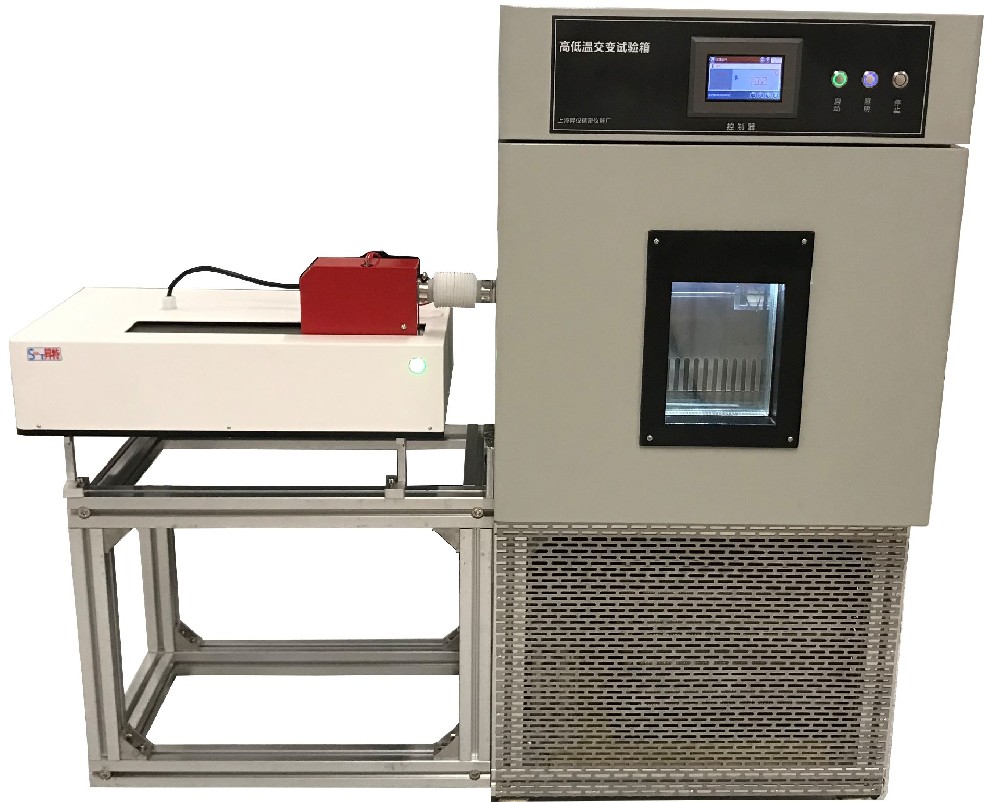

I. Parameter pairsSingle fiber tensile propertiesImpact
1. Gauge length
Whether natural or synthetic, the cross-sectional area and internal structure of fibers in the longitudinal direction can never reach an ideal uniform state. There will always be weak points along the length, making the longitudinal strength of the fiber non-uniform. When the fiber is stretched, it will always break at these weak points. Under normal fracture conditions, the longer the gauge length, the more weak points are detected, the more fragile these weak points may be, and the lower the fiber strength will be. Conversely, a shorter gauge length results in fewer detected weak points and potentially slightly higher fiber strength. Variation of strength of 1.67dtex×38mm polyester staple fiber with gauge length.
2. Tensile speed
At low stretching speeds, polymers have sufficient time to develop defects, resulting in lower strength values. At high stretching speeds, the fracture of the material is primarily due to the breaking of chemical bonds, yielding higher measured strength values. However, if the stretching speeds are not significantly different, the effect is not pronounced.
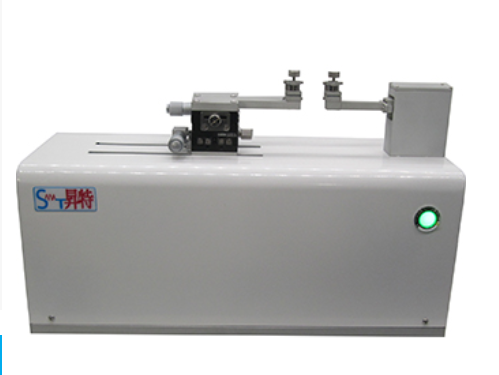
2. The fracture mechanism of the fiber is the same, and its strength increases with the increase of the stretching speed. The possible reasons are:
1. There are usually cracks between the macromolecules (which have several levels of structure) in the fiber. When force is applied, stress concentration occurs, and the cracks expand under the load. The faster the stretching speed, the shorter the fiber fracture time and the smaller the crack propagation range, resulting in higher fiber strength, and vice versa.
2. From the perspective of acute elastic deformation, chronic elastic deformation, and plastic deformation, the higher the stretching speed, the greater the proportion of acute elastic deformation (with less chronic elastic deformation and plastic deformation, and less intermolecular sliding), and the more evenly the force is distributed among the macromolecules, resulting in higher fiber strength.
III. Pre-tension
Pre-tension is the force used to straighten the fiber without stretching it. If the pre-tension is too high, the fiber will be overstretched, causing it to lose its extensibility and potentially damaging the fiber, which will also impair its strength; if the pre-tension is too low, the fiber cannot be completely straightened, and the elongation of the fiber will increase. On a tensile tester with automatic pre-tension, the setting of the pre-tension and the actual specifications of the tension clamps affect the test results of the fiber elongation.